
When we talk about crypto wallet technology, most people nod along. They think of a digital leather pouch. A place to store Bitcoin. But that mental model? It’s dangerous. We’ve watched too many people lose fortunes because they confused "storage" with "access."
Here is the raw truth: Your crypto isn't inside your wallet. It never is. It lives on the blockchain. The wallet just holds the keys to the kingdom. And if you don’t understand how that technology works—specifically the difference between who can sign a transaction—you are one phishing link away from zero.
We are going to dissect this. Not like a textbook. Like a forensic audit. We’ll look at secure crypto wallet technology, the weird trade-offs between convenience and safety, and why the "types" of wallets actually matter more than the brands. By the end of this crypto wallet technology guide, you won’t just know how it works. You’ll know exactly where your exposure is.
How Crypto Wallet Technology Really Function?
The Public-Private Key Dynamic
When you create a wallet, the software generates two mathematical hashes.
- The public key (Your address). You give this to people to send you money. It is safe to shout from a rooftop.
- The private key (The signature). This is the boss. Whoever holds this controls the assets.
Here is where most guides get cute. They say, "Don't share your private key." Duh. But they don't explain why the technology is so unforgiving. Banks have fraud departments. Credit cards have chargebacks. Crypto wallet technology has none of that. Zero. It is absolute digital sovereignty.
Think of a safety deposit box. The bank needs two keys to open it. Secure crypto wallet technology is you holding both keys. Alone. In the dark. If you drop them down a sewer grate (lose your seed phrase), the bank doesn't care. The vault doesn't open. Ever.
We see this happen weekly. A trader gets a new phone. They forget their 12-word recovery phrase. Poof. $10 million in staked Ether becomes a monument to stupidity. Harsh? Yes. But we need to be.
You may also read :- Understanding Blockchain Technology: A Deep Dive for Beginners
Seed Phrases vs. Keystore Files
You have two ways to authorize transactions.
- The Seed Phrase (Mnemonic): 12 to 24 random words.
carrottablejunglefork. The wallet algorithm uses these words to mathematically regenerate every single private key you will ever need. Lose the seed? Lose the wallet. - The Keystore File (JSON): A heavily encrypted file you save on a hard drive. You need this plus a password to unlock it.
Which is better? The seed phrase is portable. You can burn it into your memory (good luck with 24 random words). The keystore file is safer against remote hackers because they need two pieces of information. But if the file corrupts? Game over.
The hard truth: Most "hacks" aren't hacks. They are social engineering. Someone calls you pretending to be "Ledger Support." You give them your seed phrase. That isn't a failure of crypto wallet technology. That is a failure of human paranoia.
The Three Core Crypto Wallet Technology Types
You cannot pick a tool until you know the job. We classify crypto wallet technology types by one variable: Internet connectivity.
Hot Wallets (The Speed Trap)
These are wallets connected to the internet.
- Examples: MetaMask, Phantom, Trust Wallet, Coinbase Wallet.
- How they work: The private key lives on your device's RAM or hard drive. When you click "confirm," the wallet signs the transaction locally and broadcasts it instantly.
The good: Fast. Seamless for DeFi, NFT minting, and trading. You don't feel friction.
The bad: You are always online. Keyloggers? Clipboard malware that swaps your paste address? RPC attacks? All possible.
We use hot wallets for petty cash. Imagine walking around a foreign city. You have $300 in your front pocket for street tacos and cab fare. That is a hot wallet. If you lose it, you're annoyed, not bankrupt.
Pro tip: Never, ever connect your main hot wallet to a random "airdrop claim" site. That "Connect Wallet" button is the most dangerous button on the internet. One malicious smart contract approval, and the drainer script empties you in seconds. We've traced this. It's automated now.
Cold Wallets (The Vault)
These are secure crypto wallet technology by design. The private key is generated and stored offline.
- Examples: Ledger (Nano X/S), Trezor (Model T/One), Keystone, GridPlus.
- How they work: You plug the device into your computer via USB or Bluetooth. The transaction is created on the computer but sent to the device to be signed. The private key never leaves the secure element chip.
The good: Immune to remote malware. You can plug a Ledger into a virus-infected PC, and as long as you verify the screen on the device itself, your keys are safe.
The bad: Physical risk. Theft. Fire. Flood. Also, user error is massive. We have seen people buy a Trezor, set it up, deposit $50k, and then lose the recovery sheet. The device still works. But if it breaks? You are done.
A nuance most ignore: Even cold wallets aren't 100% air-gapped anymore. Bluetooth on the Ledger Nano X is a vector. It's a closed protocol, but we remain skeptical. The most paranoid users still use fully air-gapped solutions (like Keystone + QR codes).
Custodial vs. Non-Custodial (The Legal Landmine)
This isn't a crypto wallet technology type per se, but it's where people lose the plot.
- Non-Custodial (You own it): You hold the private keys. You are the bank. (MetaMask, Ledger).
- Custodial (They own it): An exchange holds the keys. You have an IOU. (Binance, Coinbase, Crypto.com).
When FTX collapsed, users lost billions. Those users had "wallets" on FTX. But technically? They had a login and password. The actual crypto wallet technology belonged to Sam Bankman-Fried. He could (and did) move the funds.
The rule: Not your keys, not your coins. It sounds like a meme. It is actually the most important legal sentence in this industry.
How Does Crypto Wallet Technology Work at the Byte Level?
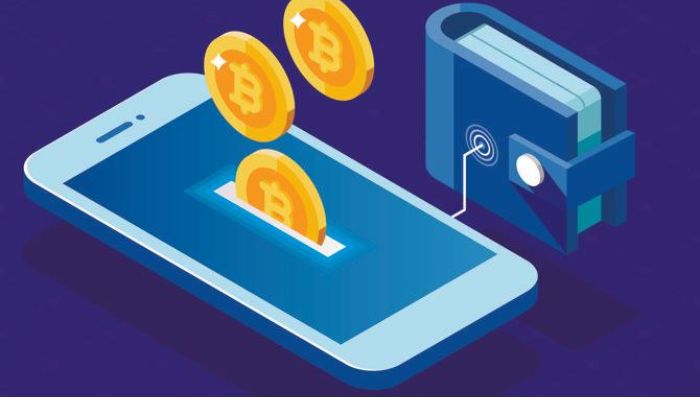
Let’s get greasy. How crypto wallet technology works is a story of math and mempools.
The Transaction Lifecycle
You click "Send 0.5 ETH to 0xAb...1234."
- Hashing: The wallet creates a digital fingerprint of the transaction.
- Signing: The wallet uses your private key to create a signature. This is mathematical proof that you authorized it. No forgeries possible (unless your private key is stolen).
- Broadcasting: The wallet sends the signed transaction to a node (a computer running the blockchain software).
- The Mempool: This is the waiting room. Your transaction sits in the "mempool" (memory pool) until a miner or validator picks it up.
- Confirmation: The miner includes your transaction in a block. The block gets added to the chain. Done.
Here is the friction point: Gas fees. When the network is congested (like during a hype mint), your transaction sits in the mempool. You can either wait 12 hours or pay a higher "priority fee" to jump the line. Your wallet estimates this. It is usually wrong.
We have watched new users set the gas fee too low. Their transaction hangs for three days. They panic. They resend it with a higher fee. Now they have duplicate transactions. The technology works perfectly—it is just ruthless about economics.
Multi-Signature (The Corporate Safety Net)
Single-key wallets are fragile. One point of failure.
Multi-signature (Multi-sig) wallets require 2 out of 3, or 3 out of 5 private keys to move funds.
- How it works: You deploy a smart contract. You define the signers (e.g., your laptop, your phone, your partner's cold wallet).
- The move: To send $1 million, three people must physically approve the transaction on their devices.
This is the gold standard for DAOs and crypto funds. But it is complex. You have to interact with a smart contract. One wrong parameter, and funds are locked forever. We see this less in retail, more in institutional.
The Vulnerability Matrix: Where Secure Crypto Wallet Technology Fails
The Supply Chain Attack
You buy a Ledger from Amazon. It looks factory sealed. But a bad actor opened it, replaced the secure element with a malicious chip, and resealed it. You generate a seed phrase. The chip sends it to a server in Russia.
Mitigation: Always initialize the device yourself. Check for "genuine" checks in the official software. Never use a pre-configured seed phrase that comes in the box.
The "Dusting" Attack
A tiny amount of crypto (0.00000001 BTC) is sent to your address. You don't notice. But the sender is watching the blockchain. If you move that dust along with your real funds to an exchange (like Kraken), they now know the exchange wallet address. They link your real identity (via KYC) to your anonymous wallet.
Mitigation: Use "coin control" features (available in Electrum or Sparrow Wallet). Never spend UTXOs that contain dust.
The Clipboard Hijacker
Simple malware. You copy a withdrawal address: 0xAbC...
The malware detects a crypto address in the clipboard. It replaces it with the hacker's address: 0xHac...
You paste. You don't double-check the first 6 and last 6 characters. You send $5,000 to a stranger.
Mitigation: Always check the full address. Or use a hardware wallet screen. The Ledger shows the recipient on the device screen. Trust the hardware screen, not the computer monitor.
The Evolution: Smart Contract Wallets
The old model (Externally Owned Account, or EOA) is rigid. If you lose your key, you lose your money.
Account Abstraction (ERC-4337) is changing crypto wallet technology fundamentally.
These are "smart wallets."
- Social recovery: You lose your key? Three friends (guardians) can approve a key change.
- Spending limits: You can approve a dApp to withdraw only $100 per day, not your entire bag.
- Batched transactions: Sign once to approve + swap + stake. No more clicking "Approve" then "Swap."
This is the future. It makes secure crypto wallet technology actually user-friendly. But it is new. The code is young. There are risks in the smart contract logic itself. We are watching closely.
How to Choose Your Stack?
Stop asking "Which wallet is best?" Ask "What is my threat model?"
| If you are... | Use this wallet tech | Why |
|---|---|---|
| A trader with < $2k | Hot wallet (MetaMask) | Fees are low. Speed matters. If you lose $500, it hurts but doesn't ruin you. |
| A long-term holder (HODLer) | Cold wallet (Trezor/Ledger) + Steel seed backup | You don't need access for years. Protect against fire and remote hacks. |
| A DeFi degen (>$50k) | Hot wallet (for approvals) + Cold wallet (for main stack) | Use a "burner" hot wallet for risky contracts. Keep 90% in cold storage. |
| A DAO or business | Multi-sig (Gnosis Safe) | No single person can rug the treasury. |
We personally use a layered approach. An old laptop with no wifi, running Ubuntu, with Electrum wallet. That is our cold storage. It is ugly. It is slow. It has never been hacked in 8 years.
The Backup Ritual (Most People Screw This Up)
You bought a Ledger. Good. Where is the seed phrase?
- Bad: On a sticky note under your keyboard.
- Better: Stamped onto a steel washer kit, buried in a fireproof safe.
- Best: Sharded using Shamir's Secret Sharing. Split the 24 words into 3 pieces of 16 words each. Any 2 pieces reconstruct the key. Store pieces in 3 different geographic locations.
Paranoid? Yes. But we have seen wildfires, floods, and divorces wipe out crypto wealth. The technology is sound. The human is the weak link.
Final Word
We have been doing this since the Silk Road days. We have seen Mt. Gox. We have seen Celsius. We have seen the Terra Luna death spiral. The crypto wallet technology works. It is mathematically beautiful. But it is also a mirror. It reflects your own discipline back at you. Be messy? Lose funds. Be meticulous? Survive.
Don't just buy a wallet. Understand the key. Whether you are exploring crypto wallet technology types for the first time or you are a veteran moving to multi-sig, remember: The chain doesn't care. The code doesn't forgive. That is the feature, not the bug.